FAQs
Frequently Asked Questions
Frequently Asked Questions
What is a thermal R-Value?
R-Value is a measure of thermal efficiency - is measures the thermal resistance of the material. The higher the R-Value the better.
Minimum R-Values are specified for ceilings in the NZ Building Code.
What is the minimum R-Value for Ceiling Insulation?
The New Zealand Building Code specifies minimum R-Values for ceiling insulation in different geographic regions of New Zealand. Read more here.Can I install ceiling insulation myself as a DIY project?
Yes you can. Mammoth ceiling insulation is very easy to work with as it is non-irritant and is designed to roll out over joists.
We encourage you to read the Installation Guidelines for Ceiling Blanket carefully since all insulation must be carefully placed around fire hazards like downlights and chimneys.
You can purchase Mammoth ceiling insulation from most building merchants although, due to its bulk, they may not all have it in stock - we suggest you ring ahead for pricing and they can order in your specific requirements.
What is the advantage of ceiling blanket versus sections/pads?
Ceiling insulation sections are designed to be placed between joists which can allow for heat to be lost in the gaps - this is thermal bridging. In contrast ceiling insulation blanket rolls out over the joists to prevent thermal bridging.
Why does Mammoth Insulation last so long?
All Mammoth insulation products are heat bonded and contain no glues or other materials that may break down over time.
And if you ever need to remove Mammoth insulation, our products are 100% recyclable. Mammoth has a 90 year warranty.
How does Mammoth Wall Blanket differ from Wall Sections?
Mammoth Polyester Wall Blanket is typically produced on a carding plant which results in a softer, less rigid form of insulation. It can be torn to length to fit in wall insulation cavities - usually stapled into position.
In contrast all Mammoth Wall Insulation sections are produced on New Zealand's only Airlay insulation plant which is capable of producing a semi-rigid section when cut to size allows for a seamless, crease-free friction fit for a superior thermal installation.
Why would you choose Wall Blanket?
Wall blanket is a more affordable format but relies on a greater level of expertise to ensure the installation is seamless, crease-free without gaps.
Wall systems using Airlay Wall Insulation Sections have been independently proved to deliver thermal performance above those in the BRANZ House Insulation Guide.
Is Wall Blanket suitable for DIY?
It is however great care must be taken when stapling into position. It is important when installing insulation that you minimise gaps, compression and do not stretch the material. A smooth crease free finish is needed to maximise performance.
What R-Value do I need for underfloor?
This is a measure of thermal efficiency - is measures the thermal resistance of the material. The higher the R-Value the better.
Minimum R-Values are specified for underfloor in the building code which for all regions of New Zealand is R1.3.
Can I install underfloor sections myself?
Yes - and Mammoth Underfloor sections are easier to install than most other forms of underfloor insulation since they are:
- non-irritant
- do not need staples or other fixings
- simply squeeze into position between joists
How do you cut Mammoth Carpark Insulation?
Mammoth Carpark Panel insulation is easy to cut with a specialised insulation saw such as Bacho or Tajima knife.
How is Mammoth Carpark Insulation/Soffit Liner fitted?
The recommended tools for fitting Mammoth Carpark Insulation Panels is an automated fastening tool such as Ramset Gas technology tool or a Hilti gun. You can download our Installation Guidelines .
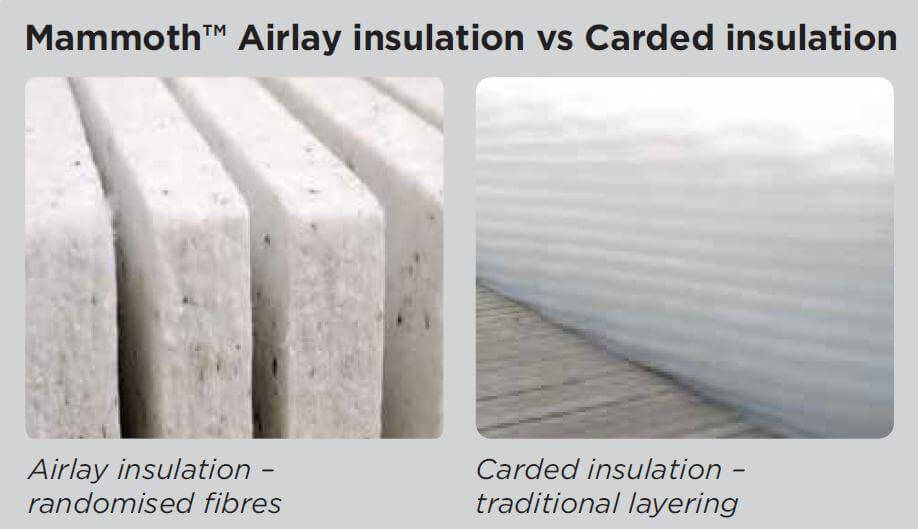
What is Airlay Insulation vs Carded Insulation?
Traditional carded polyester insulation layers the fibres whereas the more randomised nature of Airlay insulation means it has structural properties that support higher performance.
Mammoth Wall Sections are produced on Australasia's only Airlay insulation plant with properties that supports superior installation and construction R-values.
Mammoth Ceiling Blanket is produced on our carded insulation plants but Mammoth Wall & Underfloor Sections are produced on an Airlay plant.
What makes Airlay Wall Sections better?
The randomised nature of the polyester fibres in Mammoth's Airlay insulation means it has structural properties that allow it to be self-supporting in walls as well as underfloors.
Airlay insulation can be squeezed into position to create a snug high-performance installation without the creases, folds or gaps that reduce thermal effectiveness.
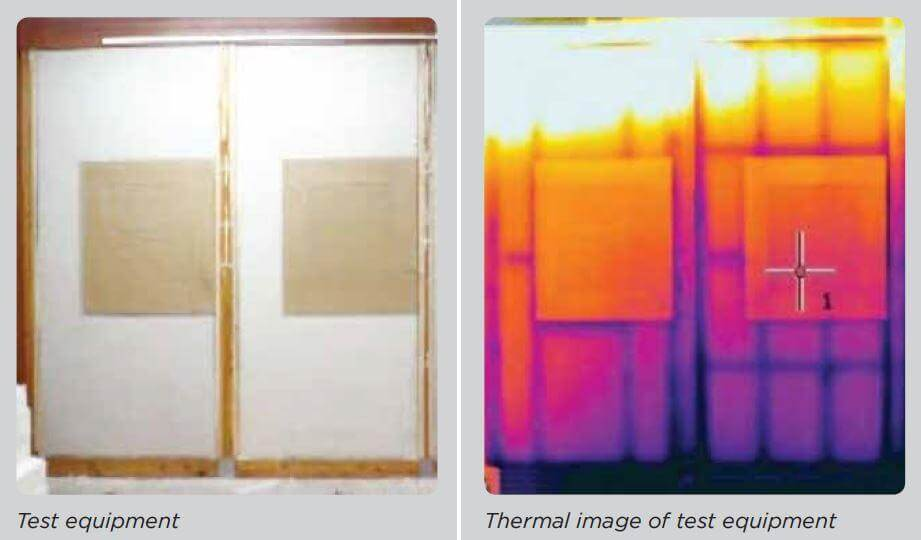
What testing has been done on Mammoth Airlay Wall Sections?
The nature of insulation produced on the Airlay plant is different to traditional polyester or fibreglass insulation and so was believed to perform exceptionally well in wall and underfloor systems. To prove and document the performance of Mammoth Airlay insulation, New Zealand’s leading building research laboratory was commissioned to undertake comprehensive independent insitu testing using heat flux transducers and associated software.
The test results showed that for the tested wall construction systems, featuring Mammoth Airlay insulation, exceeded the R-value of equivalent systems in the BRANZ House Insulation Guide. Read more here.
Contact us today
If you need more information, a quote, talk about H1 calculations, or would like to chat to a Mammoth Insulation Trade Representative, contact us here.